A recent trip to China has me reflecting on the life treasures I learned there. Let me tell you about one of the biggest take-home lessons from our travels:
Fit and happy grannies. They’re everywhere.
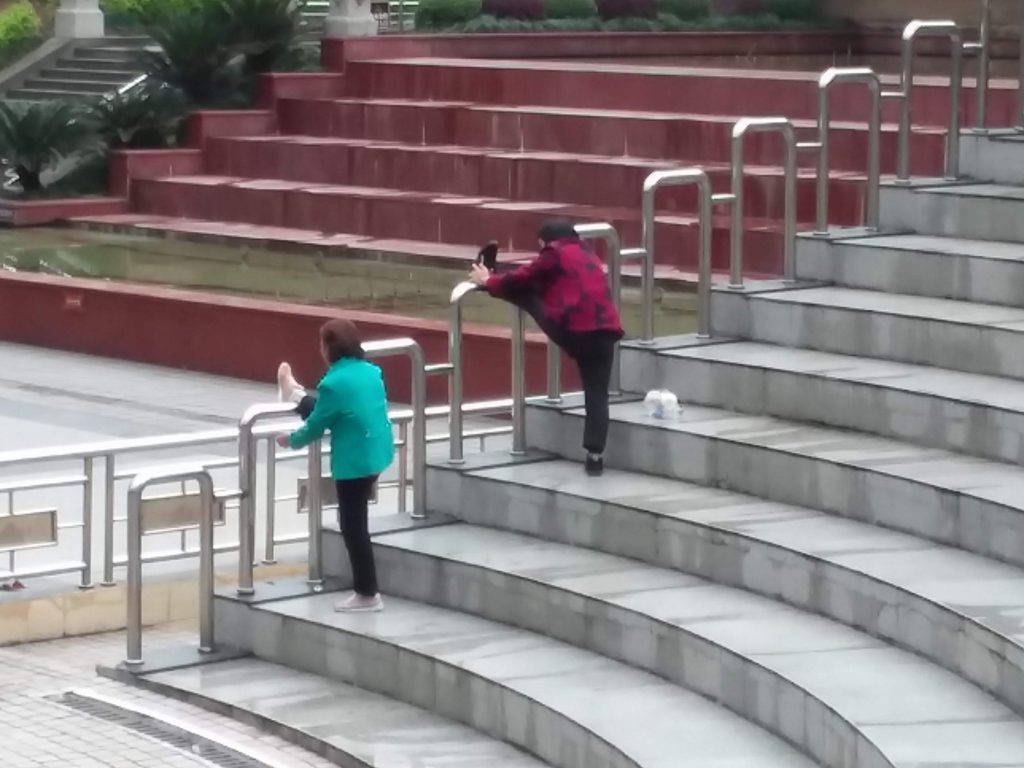
I thought the first few were anomalies, outliers, maybe even freaks of nature. These 60-, 70-, and 80-something grandmotherly types, briskly walking with their friend, laughing and talking. Bicycling home from the market, basket full of produce. Playing in the park with their grandchildren. Calisthenics on the sidewalk. Exercising on playground equipment (it’s a thing… they really do this). Climbing steps at the subway station carrying their toddler grandchild in a backpack, singing while ascending (you go, girl!). Dancing under the shade of spring’s trees with their husbands.
But no, they are not unusual. We visited four different cities in China and observed this same phenomena everywhere we went: active, agile, engaged elderly women. Men, too. But I especially keyed in on the women because their lives not only fascinated me, but inspired me and got me to thinking: why?
Why, when these humans are made of the same flesh and blood as women in my country, were they so active and capable? Hearty, even. Is it some super gene they Chinese race possesses? I don’t think so. Instead, my hunch is that it’s owing more to the structure of their society and the mindset of the individuals.
In Chinese culture today, many elderly live with their adult children and help take care of the grandchildren. In turn, the adult children support their parents and work full-time (or more). It is not a luxury to have the grandparents to involved in the lives of their grandchildren. It is a necessity.
Could that be part of what keeps these elderly young in body and spirit? They are needed and important. They recognize their value in the world. Who, by playing with young children, doesn’t become a bit younger?
Could it be that the accepted norm and mindset is that aging does not mean becoming irrelevant and immobile, but important to a healthy functioning society?
Mommy-and-me playgroups weren’t the norm, but grandma (or grandpa) -and-me gatherings were. Everywhere we went, we saw these groups in parks. The children played, the adults talked and laughed and joined in chasing balls or balloons or got down on the ground and played with their small grandchildren. Such a happy scene. Such community.
Community is something else we observed in the elderly. If they weren’t out playing with their young grandchildren, they were in the parks with their peers playing cards or other games. Or walking or doing tai chi or dancing or playing instruments. Earlier in the day, these grandparents saddled themselves and their school-age grandchildren on their bikes or scooters and gave them a ride to school. And then these sassy souls had the day free to pursue activities with their friends.
I mentioned to my son (who is studying abroad there this school year) that it appeared to me that the elderly were happier than the young people. “Absolutely true,” was his reply. Smart phones have hit China, and young people seemed to tune everything else out (the addictive nature of phones is a human condition, not a uniquely Chinese one). Coping mechanism for all the stress? Maybe so. Even the older generation can become addicted, but mostly older people were engaged in talking with those around them, or quietly watching the goings-on in their surroundings. In short: involved in life around them.
Dan Buettner’s excellent book, The Blue Zones, examines the common factors of people groups around the world who have long life spans. Not surprisingly, these elderly use their bodies in functional exercise every day, and are connected to friends and family. Full of life.
Of course I speak in generalizations here, and we can all think of exceptions, but in my country, I hear more fear and doom about aging. Alzheimer’s is on the rise, as are debilitating diseases such as diabetes, cardiovascular disease and cancer. We fear being left alone, forgotten in a nursing home. The mindset and expectation is that aging means demise of body and mind. And it is so. But many of the ailments that plague us are lifestyle-related.
The culture and structure in the U.S. is different than China. Yet we still can be intentional about creating opportunities for increased movement and gentle, daily exercise. We can play and sing and dance. We can view ourselves as valuable resources for our communities, sharing our hard-fought wisdom and love with the younger generation. We can create connection with loved ones and friends around us.
Though we don’t have control of everything (air, water, food supply, trauma, etc.), there are some things we do have control of. Exercise, mindset and connection are a few of them.
These are what keep these Chinese grannies fit and happy. I want to be like them when I grow up.
What about you?
How are you setting yourself up to be a fit and happy granny?